The One to Start With

If scarves and blankets are as far as you've gone, this is the vest that makes a first garment feel manageable.

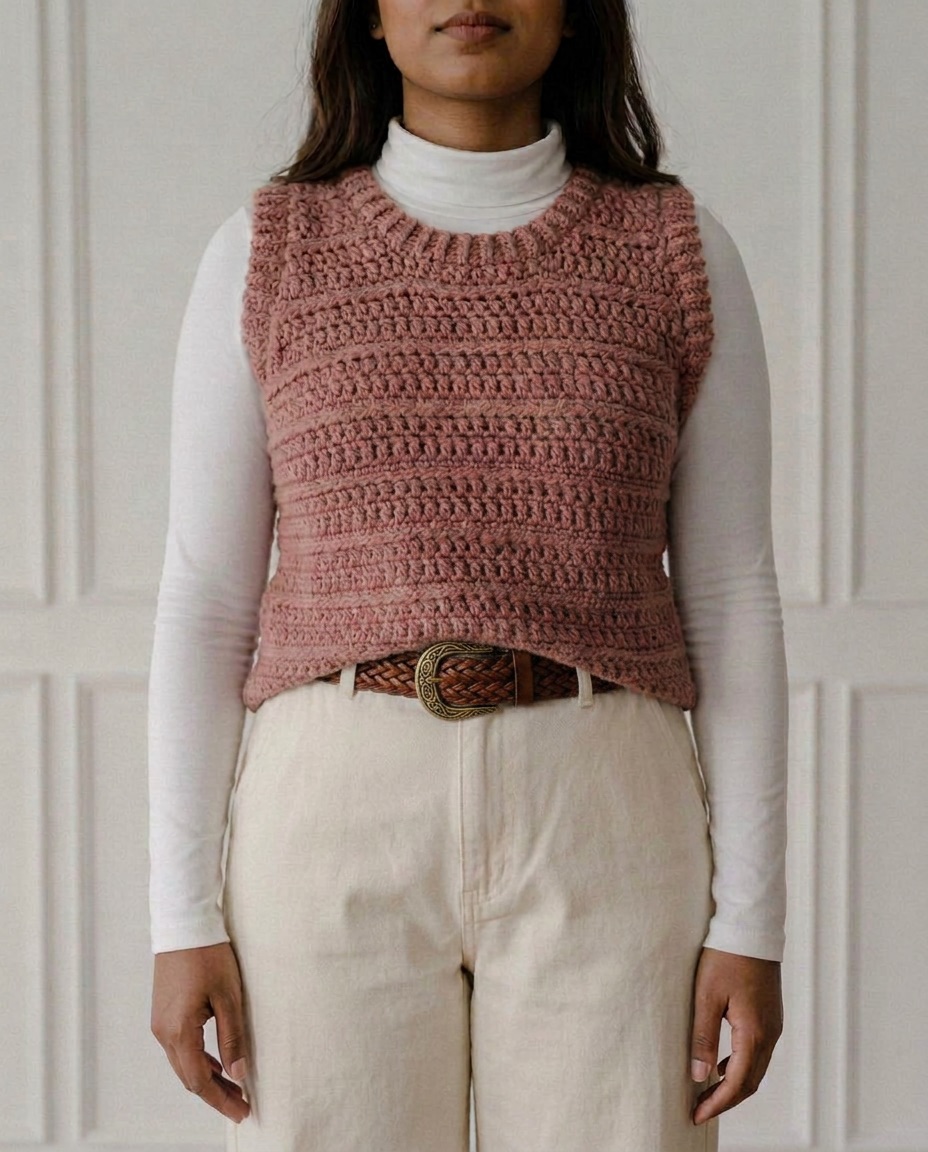
Dusty pink crochet sweater vest with horizontal textured ridges and a ribbed crew neckband, layered over a white turtleneck
Stitchberry

Alcott Sweater Vest

Beginner Friendly Half double crochet Third loop stitches Slip stitch ribbing

This is the sweater vest that reads as knitted at a glance, which is exactly why it belongs at the top of the list. The texture comes from alternating half double crochet between the third loop and the back loop, then breaking the surface every few rows with a line of loose slip stitches. The result is a squishy horizontal ridge you'll want to run your hand over, and it carries that whole academia layering look without any colorwork.

Both panels are worked flat from the bottom up with straightforward decreases shaping the armholes and shoulders, and the ribbing around the neck and armholes goes on after the seams are done. The designer rates it easy and includes photos throughout plus a video for the ribbing technique.

  • Yarn About 710 to 1,290 yards of DK weight (#3) yarn. The sample uses WeCrochet Swish DK, a wool that keeps the ridges crisp instead of letting them flatten.
  • Hook US I/5.5 mm for the ribbing, US J/6 mm for the body. The smaller hook keeps the bands firm while the body stays soft and squishy.
  • Sizing XS to 4X, finished bust 32 to 60 inches. Length is easy to change, and the pattern marks the exact row where you add or subtract rows.
The Lacy One

Openwork clusters and a row of buttons down the front, for when the vest is meant to be the whole outfit.

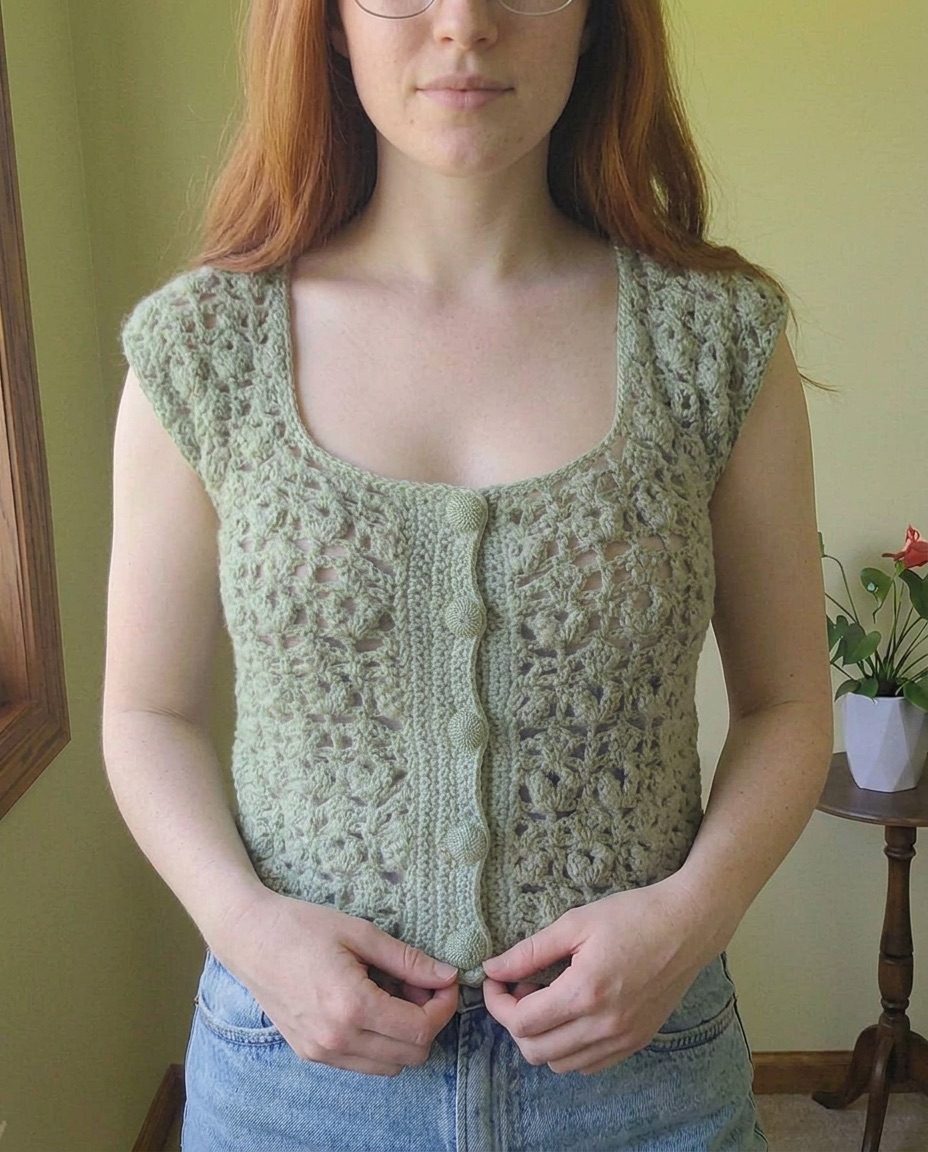
Sage green lacy crochet vest with openwork cluster panels, a scoop neckline, and a row of round buttons down the center front
Yelena StyleCrochet

Aryna Crochet Vest

Intermediate Double crochet Cluster stitches Button band

This one trades warmth for air. The fabric is built from three double crochets worked together into a single stitch, so the surface fills with small puffed clusters separated by open gaps, and the scoop neckline keeps all that texture from reading heavy. Buttons run the full length of the center front, which means you can wear it fastened as a top on its own or left open over a tee.

You work a back panel and two front panels in an eight row lace repeat, seam them at the shoulders and sides, then add a single crochet band down both front edges with the buttonholes worked into the right one. A round of loose slip stitches tidies each armhole at the end. The full video walkthrough runs a little over an hour.

  • Yarn Roughly 240 to 500 g of cotton, depending on size. The sample uses I Love This Cotton, which gives the clusters enough body to stand up rather than collapse.
  • Hook 5 mm, US H-8. Big enough to keep the lace open and airy without letting the whole fabric sag out of shape.
  • Sizing S to 3XL, chest 32 to 54 inches. There's also a made to measure option, where you chain to your own bust measurement in a multiple of 6 plus 3.

The One With a Secret Back

A close fitting cropped vest that saves its best detail for the side nobody sees first.

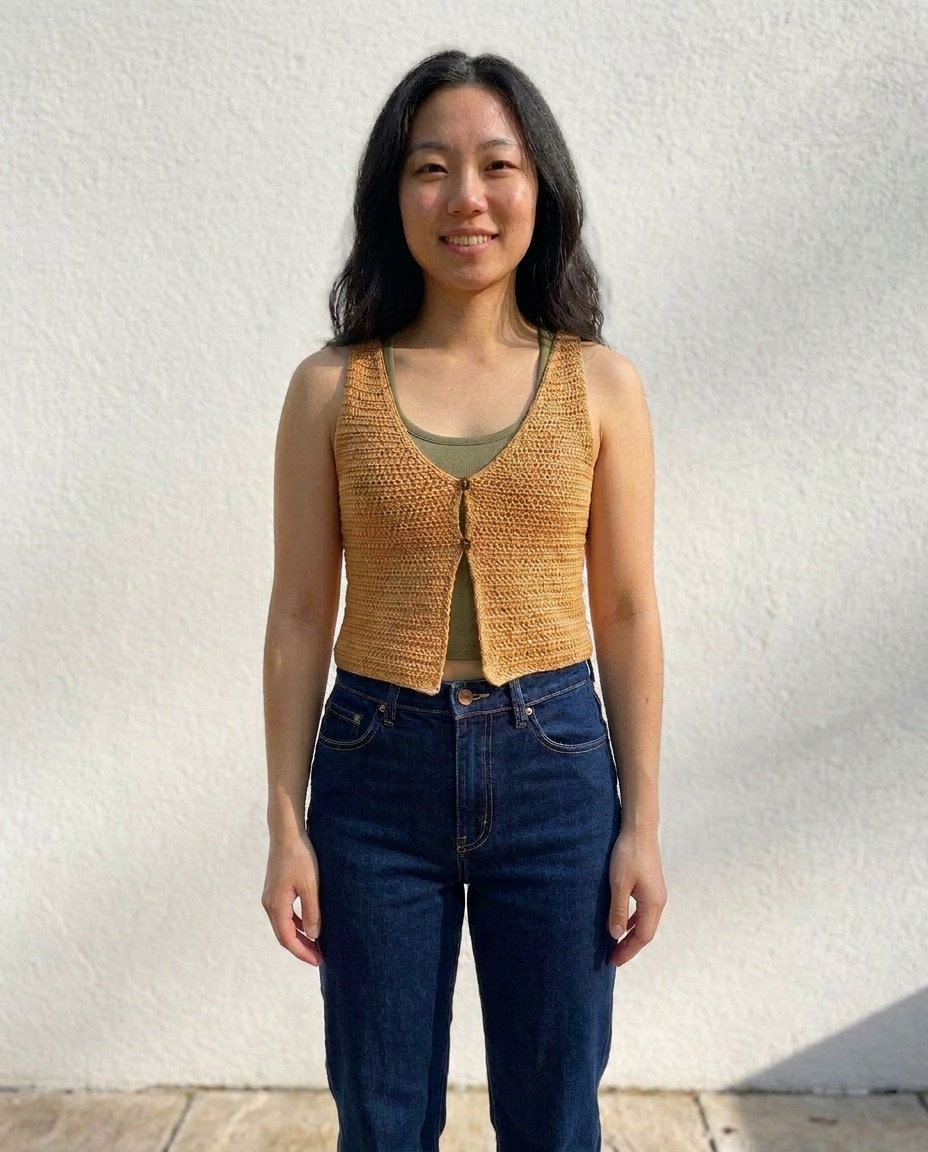
Cropped golden tan crochet vest with a deep V neckline and two small buttons, worn over an olive tank top with jeans
Evelyn And Peter Crochet

Sunnyside Vest

Intermediate Half double crochet Cluster motifs Seaming

From the front this is a neat cropped vest with a deep V neckline and two small buttons, smooth enough to pass for a knit tank. Turn around and there's a row of sunny cluster motifs running straight across the back, which is where the pattern gets its name and most of its charm. The fine cotton blend keeps everything close to the body instead of bulky, so it wears like a fitted top rather than a layer.

The motifs come first, five to ten of them depending on your size, and you sew them into a strip before working the back panel up from it in half double crochet. The two front panels start from a foundation row and get joined at the shoulders and sides, then a single crochet trim carries two button loops up the front edge.

  • Yarn About 420 to 870 yards of fine (2) weight yarn. The sample uses Lion Brand Cotton Bamboo Linen, light enough to wear in real summer heat.
  • Hook E/3.5 mm. Small, which is what gives the half double crochet fabric that smooth, close, almost woven surface.
  • Sizing XS/S through 5X in six combination sizes. The fit is close and the back motifs are a fixed width, so choose from the bust chart rather than your usual size label.

Before You Cast On

Five things worth knowing about all three of these, none of which the pattern pages spell out for you.

1

Swatch, Then Pick by Finished Bust

Gauge matters here in a way it never does for a scarf. Work the swatch each designer gives, measure it flat, and choose your size from the finished bust number rather than the size you usually buy. A small tension difference multiplied across a whole panel turns into inches.

2

Keep Your Slip Stitches Loose

Two of these vests use slip stitches structurally, for the ridge rows in the textured one and the armhole edging in the lacy one. Worked at normal tension they pull the fabric in and become almost impossible to stitch back into. Go up a hook size for those rows if it helps.

3

Block the Panels Before You Seam

All three vests are made flat in pieces and sewn together, so blocking first is what makes the edges actually line up. A light steam is plenty. It opens the lace, evens out the stitch texture, and lets you check a panel against the measurements while there's still time to fix it.

4

Buy the Buttons Last

Both buttoned vests use worked buttonholes or chain loops rather than hardware, so the opening ends up whatever size your tension makes it. Finish the front bands first, then take the vest with you and match the button to the actual hole. The cropped one uses 8 mm buttons as a reference point.

5

Match the Fiber to the Season

These split neatly by weather. The two cotton vests stay breathable for warm months, while the DK wool one is built for cold. Substituting fiber is fine, just remember cotton is heavier and less springy than wool, so the same pattern in cotton hangs longer and denser than the sample does.